For people who've already done the work — and now want to evolve how they evolve.
DM Life Evolution is not a course, not therapy, and not another personal development modality. It is a deliberate practice for re-patterning the nervous system, reclaiming your energy, and becoming someone who continuously evolves themselves — without needing a method to do it for them.
Book a call to discuss Watch the WorkThe machines are learning to evolve themselves. So must we.
Artificial intelligence is crossing toward super-intelligence through a single move: recursive self-improvement. Each generation doesn't just solve new problems — it upgrades the system that solves problems. Most of us, meanwhile, are meeting an exponential world with roughly the same inner operating system we had twenty years ago. Linear tools, exponential reality.
Ordinary development plateaus. Recursive self-evolution compounds — and keeps pace with a world that won't stop accelerating.
This is the real question underneath the noise about AI. Not whether the machines will keep evolving — they will — but whether we will. As routine thinking gets automated, the human edge narrows to what doesn't automate: consciousness, creativity, judgement, and the capacity to keep becoming someone new. That capacity is not fixed. It can be trained — and, like the machines, it can be made recursive, so your ability to grow gets better at growing, and development compounds instead of crawling.
That is the entire aim of this work. Not to get better at one more thing — to evolve how you evolve, and become, deliberately, a self-evolving human being. It is closer to species development than to self-improvement. At this moment in history, that is starting to look less like a luxury and more like a necessity.
Ordinary work changes you once. This changes your capacity to change — so each pass strengthens the next, and it compounds.
— Anand Rao
The old way of change. And the inverse.
Most of what you have been taught about change is some version of one of two moves: examine the past to reduce its charge, or reframe the thought to change the belief. Both are valuable. Neither installs the new thing. This is structurally different — we don't argue with the belief you can see, we loosen the belief behind it: the one actually holding the pattern in place.
The Old Way
DM Life Evolution
Why the thing you push on never moves.
The belief you can see sits on top of two you can't. Work the visible one and you fight the whole stack. Loosen the belief underneath, and the visible one lets go.
Don't take my word for it. Watch it happen.
Two pieces take a single live moment from the free intro sessions and pull it apart, step by step, so you can see the structure for yourself before you decide anything. No theory you have to take on faith — a real change, slowed down.
Eleven minutes, no pushing — and a man stops being who he walked in as.
A line-by-line teardown of a live identity shift from the Saturday session — and why working the belief you can see never moves it. You watch the move, then read what was happening underneath.
Read the teardownI made a video that's deliberately confusing. What your brain does with it is the lesson.
The mathematics of change run at full speed — a demonstration of the principle hidden inside the discomfort of not quite being able to follow along.
Read the pieceYou've already done the prerequisites. You're looking for the next layer.
This work is not mass market by design. The container is small because the practice requires depth, not breadth. If most of these read as recognition rather than aspiration, the work is for you.
You're in your 40s, 50s, or 60s. Successful by every external measure. Quietly unsatisfied by it.
You've done significant therapy. You feel you've exhausted what examining the past can give you.
You've worked through multiple personal development modalities. The insights landed cognitively. They haven't tipped over into your life.
You're comfortable with ambiguity. You don't need a tidy map before you'll engage.
You're intelligent. You notice when something is a repackaging of what you already know — and when something is structurally different.
You've been solving problems you suspect you've already solved. The loop is familiar. You can't think your way out of it.
You're a practitioner, coach, founder, or leader whose work touches a lot of people. When you change, everything you touch changes with you.
You don't want another method. You want capacity.
What the work actually delivers.
This is structural change, not motivation — and structural change behaves differently. It doesn't stay in the area you worked on, and it doesn't wear off by Friday. Once it lands it generalises across your whole life, and it compounds. Here is what the work actually builds.
What wouldn't move, quietly does.
The patterns you've fought for years start to give — not because you push harder, but because we stop pushing. Work the belief behind the belief rather than the belief itself, and the thing that felt permanent turns out not to be.
You can hold more without being thrown.
More intensity, more paradox, more not-knowing — met rather than fled. What used to land as an eight or a nine starts to land as a three or four: not because life got smaller, but because you got bigger.
Your system stops feeding what isn't yours.
You begin to tell what's actually you from what you've been carrying — for the room, the family, an old version of a relationship. A surprising amount of what felt like your problem turns out not to be, and simply drops away.
You stop needing the method.
The aim was never to fix one thing; it's to build the capacity that meets the next thing, and the next. Change becomes something you do for yourself — and that gets better at itself over time.
Not a syllabus. A system.
There is no "week one we cover this." The work is one engine applied to whatever you actually bring — so its shape isn't a list of topics, it's a set of layers, each one serving the one above it.
Become self-evolving.
Everything points at one outcome — not another fix, but the capacity to keep evolving yourself, so your ability to change gets better at changing and growth compounds instead of running out.
Change the structure, not the content — by working with it.
Underneath every technique is a single move: we don't argue with the part of you that wants to stay, we re-pattern the system that generates your experience. Non-opposition, the belief behind the belief, self-as-process rather than fixed thing, resetting the state before the problem — these are all faces of that one mechanism.
Applied to the whole of you.
The same move runs everywhere, which is why this isn't a course about one corner of life. Over six months it goes wherever you need it:
Experience first, in a coherent group.
You get the experience before the explanation — change runs through your nervous system, not your notes — inside a small, capped group whose shared field does part of the work. The map arrives once the territory is already yours.
Not a first attempt. A culmination.
DM Life Evolution did not appear from nowhere. It is the synthesis of two programmes that came directly before it — each one answering a question the last one opened. This is the latest assembly of a body of work that has been refined across fourteen cohorts.
Recursive Self-Evolution
The question: how do we become continuously self-evolving — not making one change, then another, then another, but changing how we change? Turning the process of evolution back on itself.
Finding Your Flow
The discovery: it happens through non-opposition, not force. Flow not as peak performance, but as the condition of meeting yourself and reality as process — change that never fights the part of you that wants to stay.
DM Life Evolution
The synthesis: both folded into one complete system of change work — one recursive capacity, applied to the whole of a life. Everything learned across those cohorts, distilled into something that can actually be taught.
— Anand Rao
Changes that come faster than people expect. Because the work is structural.
When you work the structure instead of the content, change tends to come faster — and hold longer — than people expect. None of what follows is a lucky exception; it is what the approach tends to produce. Details are anonymised, or shared with permission.
Three months trigger-free, after one session. Reactions that had been firing three or four times a week simply stopped — for three months straight. The person hadn't even noticed until they were asked.
A future, opened in one conversation. Someone who genuinely couldn't picture more than three months ahead found a living sense of three years open up. A single sentence dissolved years of resistance.
A lifelong fear, simply gone. A fear of water — never worked on directly — quietly disappeared. She noticed it in a pool abroad: "that's weird, I'm not scared anymore."
"Change has to be hard" — dissolved in twenty minutes. Once that one belief let go, change became easier across every area that came after it.
Anxious to settled, in twelve minutes. Not by managing the anxiety — by showing a nervous system that it already knew the way down, and had only been making it conditional on the world.
The work speeds up as it goes. Across a cohort, a shift that took eight minutes in week one took three by week two — people catching their own patterns mid-stream and running the move themselves.
From the people who've already done it.
Drawn verbatim from MMM XIV, AIE, the Saturday Coaching Club, and 1:1 work. Edited only for length. Full names available on request after the discovery call.
"When you don't fight it or try to force it, it just flows into another form, another experience."
"I have a much richer sensation of what the discomfort actually is — rather than just a signal that makes me jump out of it."
"Those dumb little exercises were actually very, very helpful. They made me aware and conscious of all things — how I confront every little decision."
Twenty-six weeks. Live work, with room to integrate.
Late June to late December. Dense, close-together live sessions, interleaved with self-study weeks where the references consolidate on their own. Change is not linear here — the early phase looks quiet because the patterning is implicit; through the autumn it compounds; by December the capacity is yours.
Anand Rao.
Educator, coach, and founder. I have spent many years on a single question: how human beings actually change — and how to make that change reliable, embodied, and self-sustaining.
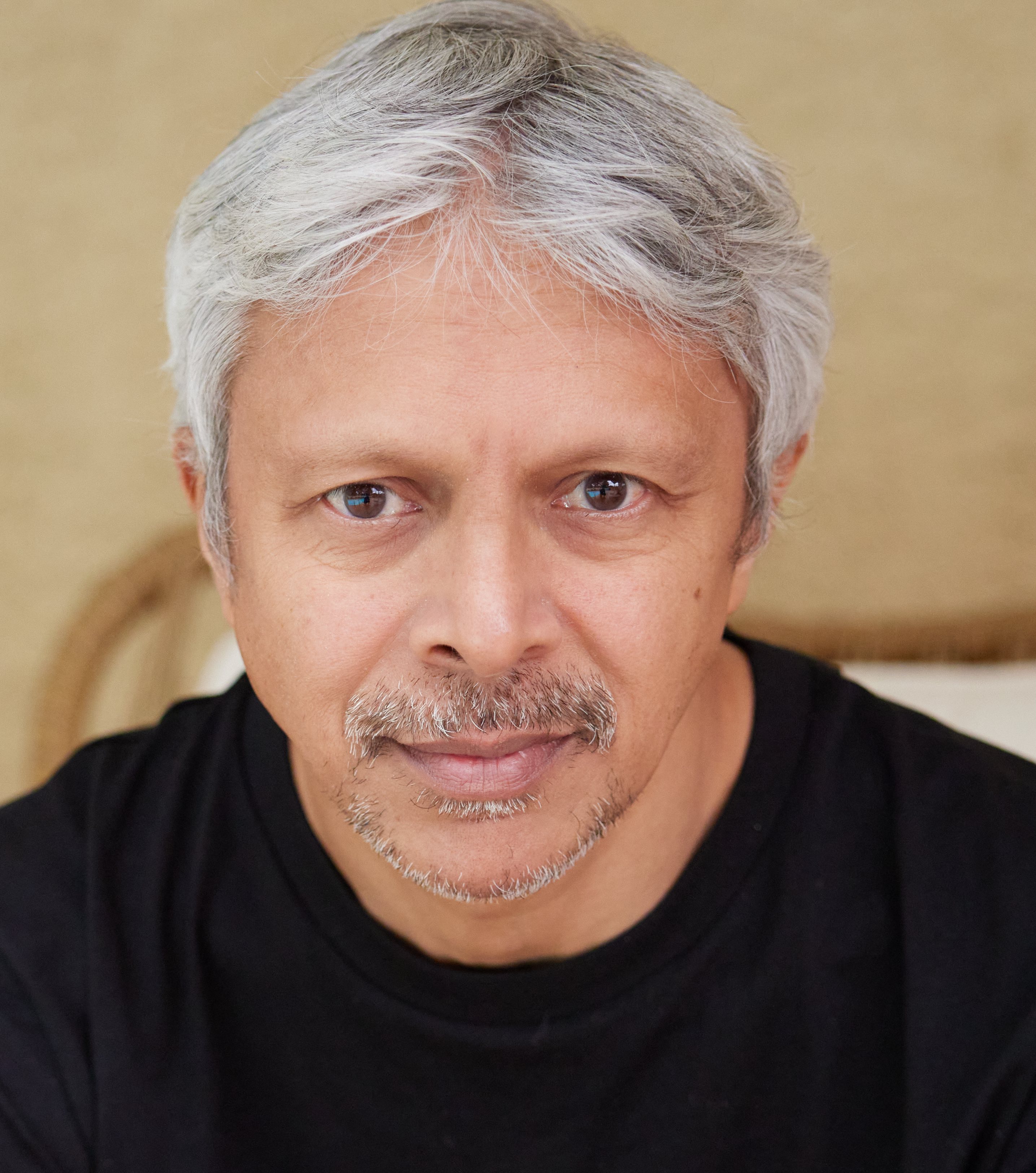
My work is a confluence. Over many years I have drawn together a wide range of methodologies and practices, each strong at a different part of being human — from early development and attachment and the family patterns we inherit, to adult stage development (Kegan, Cook-Greuter, and Terry O'Fallon, whose coaches and debriefers I went on to train), to learning to know your own energy and tell what is you from what isn't, to resetting the nervous system, to waking up to who you actually are, to turning all of it into practical action in the world. The NLP tradition, somatic and trauma-resolution work, developmental research, and contemplative lineages from Castaneda to Taoist and Buddhist practice all feed it. I have built on these rather than belonging to any one of them — and most of what I teach sits upstream of where each usually begins.
I founded Adventures in Mind, and over the years have built and run fourteen cohorts of the Magical Mystery Mastermind, alongside AIE, Get Moving, Augmented Awakening, and the long-running Saturday Coaching Club. Behind all of it sits roughly 1,200 hours of recorded sessions — which I have spent recent years studying closely to find what actually, reliably produces change, and to fold it into one coherent system.
None of this is theory I read in a book. It is work I do on myself, daily, and have done for a long time. I am not against therapy, or coaching, or any modality that has genuinely helped you. This is simply the next layer — and after everything that has come before it, I think it is the clearest and most complete version of the work I have ever been able to offer.
Six months — because that's what change requires.
Nothing structural reorganises in a weekend; lasting change needs sustained contact, which is one of the real conditions for it to hold at all. So this is a six-month commitment, priced as the serious piece of work it is — and if it isn't landing after the first month, you get your money back.
The full six-month arc.
- The complete six-month programme, live + self-study
- Weekly live group sessions with Anand
- Guided self-study integration between live sessions
- 1:1 deepening sessions through the six months
- A small cohort, capped at 12
- Lifetime access to the cohort recordings
- 30-day money-back guarantee
No application form. Just a conversation.
There is no form to fill in and no hard sell. Every place is filled by genuine fit — I take all the risk of that, so I only take people I believe can get the outcome. The call is free, frank, and short, and either answer is useful.
Book a call
Pick a time that works. Around forty-five minutes, free, direct with me. No preparation needed — come as you are.
We find the fit
A frank conversation about where you are and what you're after. You only join if it's a genuine fit — I won't take you on unless I believe the outcome is real for you.
Confirm
If it's a yes on both sides: a simple agreement, transparent pricing, your choice of pace. Enrolment closes on 28 June, the day before the cohort begins.
Begin
Onboarding within the first week. You begin the work when the cohort begins. From there, you show up — I take care of the rest.
To install, in those who have already done the work, the capacity to keep evolving — fluidly, without me.
This is the work. If you recognise yourself in it, the next step is small. The call is free. The fit is real or it isn't, and either answer is useful.
Book a call to discuss